Home/Travel Diaries/Istanbul 2022: Choosing a Specialization for a Successful Future. Day 1.
Istanbul 2022: Choosing a Specialization for a Successful Future. Day 1.
Teacher’s Diary — Anna Evgenievna Tanasiychuk
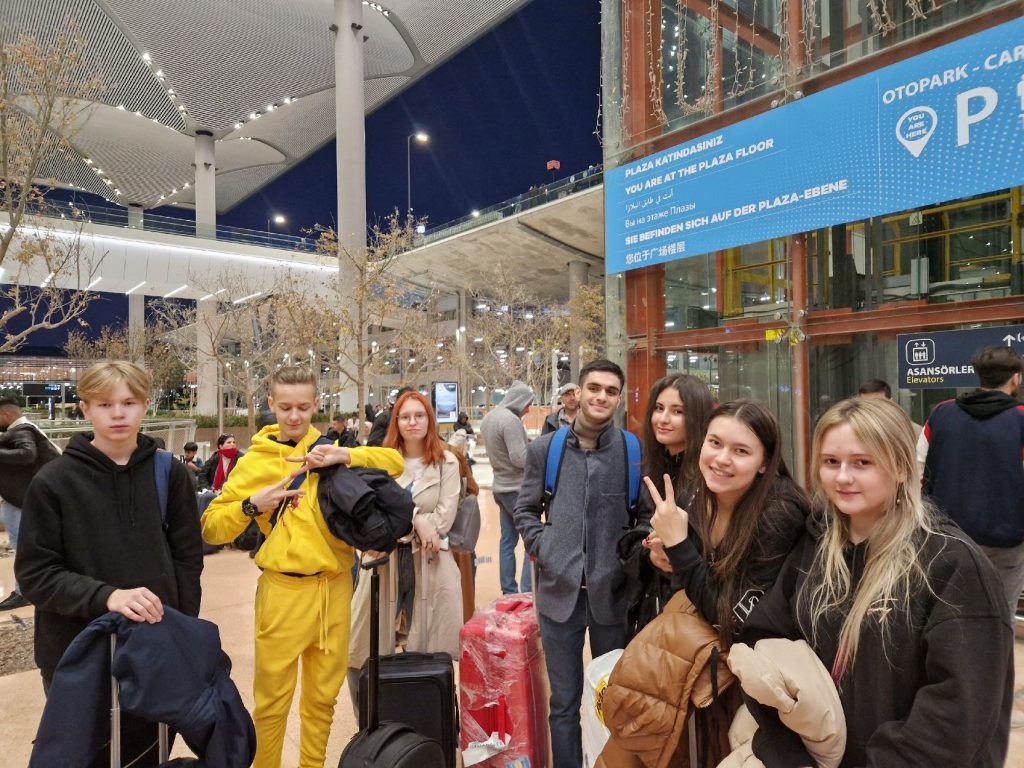
Europe and Asia, old and new, high-class and authentic, Christian and Muslim — all of this comes together in one exquisite masterpiece in a unique city of the world — Istanbul. But more on that later. Let’s get to the essence! What are we doing here with teenagers? We are exploring global experience in education.
I want to talk about the MAIN thing — the educational program. It is this that makes it possible to program the achievement of a goal. We started with GOAL SETTING!
In choosing a profession, this is ESSENTIALLY IMPORTANT! How many mistakes young men and women make in this matter.
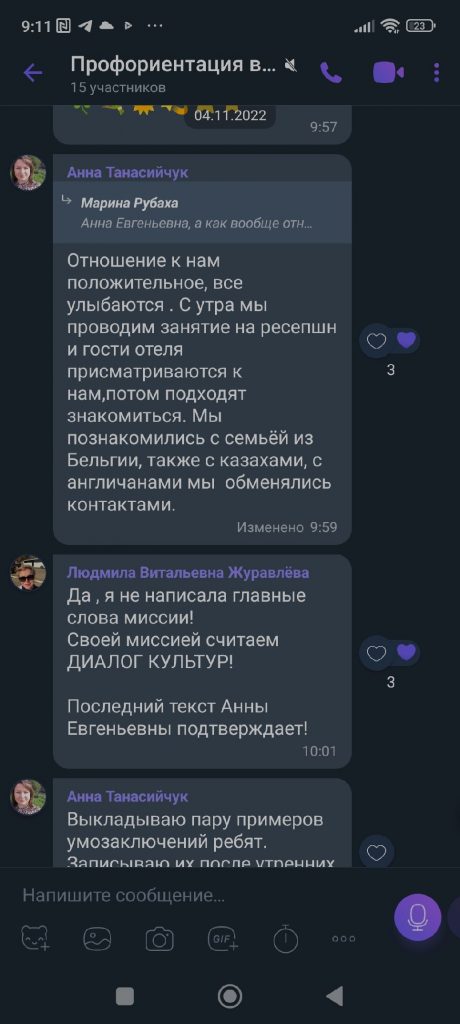
The main mission, approved by our Academic Council for this educational expedition, is to help our children become the subjects of their own lives — that is, to develop a sense of self-worth and confidence in the future. As a teacher, I prepare for this, even though I have done it many times before.
The students, in turn, set personal goals — to make a conscious choice of their future profession. And not just “whatever happens,” but by studying global experience using the example of Istanbul, an amazing city — a place of power for both Muslim and Orthodox civilizations!
Ahead of us are 5 universities to explore. Many thanks to our international partners for their cooperation — our participants have a unique opportunity to explore the global experience of higher education. By the way, even just getting into the best universities today is not easy, let alone an entire career guidance program.
Day 2
From the diary of Fuad Nakhmetov.
Today we visited one of the largest universities in Istanbul — Medipol. The first thing that catches your eye is the presence of two campuses. Both, as we noticed, are quite large. They are located relatively close to each other (considering Istanbul’s eternally congested roads and its scale). The campus we were at is divided into two parts, though one part is not yet operational — it’s waiting for its future students. But even so, the working part of the campus is literally buzzing with life. Stepping inside, you can witness an entire life filled with student bustle.
The university immediately impresses with its design: not just gray and boring corridors, but a whole innovation center with numerous classrooms and laboratories. The laboratories, perhaps, stand out as a separate form of “art.” 200 robots in the dental laboratory! (For comparison, the Sorbonne has only 36). These dentists will definitely become professionals in their field.
And it doesn’t end there. There are 6 floors above ground and 5 below. Entering the university, we can observe queues at cafes, coffee shops, and even “Starbucks” — which is quite unusual for us Russians. Some are standing in line, some are drinking coffee, and others are simply spending time with a phone or a book in hand — this is how students spend their lives in a designated space for socialization.
From the very threshold, you start to feel like a student and anticipate that moment when you’ll be an adult. We were all very impressed by Medipol. Many say that medicine is well-developed in Turkey — today we understood why.
And, of course, the main attraction of the day was the legendary Hagia Sophia, which has traveled the path from church to mosque. Despite its Muslim present, in the past this wonderful place was an Orthodox church. But with the conquest of Constantinople by the Ottoman Empire (1453), the church became a mosque. In the 20th century, Hagia Sophia became a museum, and in 2020, it became a mosque once again.
The mosque literally conveys the atmosphere of the past: ruins that have become a landmark serve as a decoration in the mosque’s courtyard. In addition, one can also see a characteristic of the Turkish people — respect for others. The Turks did not remove the Orthodox images but merely covered them for the purpose of performing prayers. In some halls, you can see uncovered images of Orthodox saints. The mosque takes your breath away and makes you look at Turkey and its inhabitants in a new light. Because this is not just a huge, magnificent, wonderful mosque, but also a living monument of culture and history that speaks to us about the “distant” past, which we can touch and feel.
Day 3
From the diaries of Alexander Trifonov and Gleb Samsonov.
Sasha: This is my first time in Istanbul, and my stay here amazes me greatly — it’s not every day you see a city that is twice the size of Moscow. Today we explored one of Istanbul’s top universities — Sabanci.
The drive to the university was long, but when our lengthy journey finally ended, I thought the driver had entered a large residential area to fuel up his VIP car. But to my great surprise, this was our university — which soon lived up to its size.
Sabanci University was built by the famous Sabanci family, which devoted as much time to it as young professionals — who create our future, who create an era — deserve. Sabanci is radically different from all universities in its program. Students here do not experience the stress of time constraints, and they won’t have to ask themselves: “Did I apply to the right place?”, “What if this isn’t the specialty I need?”, “How can I choose a profession (direction) if I have no time at all?”… To prevent such questions, they are given the opportunity to study in a general education system for the first 2 years, which also includes optional additional courses.
Through these courses, one can delve so deeply into a specialty that there will be no problems with choosing a direction. And if you add to that the fact that there will be about 500 events held in just 9 months, organized by major global brands like “Redbull,” and that just one diploma from this “giant” (9,165 square meters) gives you a job at good companies without experience — it’s impressive.
Much can be said, but everything has its downsides, and the only thing I can point out is the price — it’s quite high, although there is a 25% discount for international students. Overall, I really liked the university, and I would like to follow its future development.
Gleb: After the university, our plan for today included a visit to Galata. On the way, we were drawn to the narrow streets with Turkish shops. You can find many interesting things here: from branded stores to antiques. This didn’t stop us from reaching our goal! At the meeting point stood an ancient tower from the Ottoman Empire.
Climbing this magnificent structure of our ancestors, a wonderful view of the most beautiful city of Istanbul opens up before you. Every day, Galata warmly welcomes thousands of tourists from all over the world, each of whom leaves having discovered the amazing history of the city of two continents.
Day 4
From the diaries of Aytan Huseynova and Nara Aliyeva.
Today we visited Topkapi — the main palace of the Ottoman Empire until the mid-19th century, located in the center of Istanbul. This is where millions of tourists go to learn more about the sultans, their harem, and the history of the Ottoman Empire. We dedicated almost the entire day to this, because you need time to explore all 4 parts of the palace.
Passing through the gate, we enter the first courtyard — Alay Meydanı. Inside there is a fountain and the Church of St. Irene.
The second courtyard of Topkapi Palace — Divan Meydanı — often served as the main stage for many ceremonies, such as the enthronement of a new sultan, the reception of foreign ambassadors, and holiday ceremonies.
The third courtyard — Enderun Avlusu — where we examined the huge throne hall, above which towered the padishah’s golden throne, decorated with precious stones. The sultan sat on it. Everyone else, by tradition, was seated on the floor on special cushions. We really liked the Sultan’s Treasury.
The fourth courtyard was built for rest and seclusion in a beautiful “paradise” garden. From here, magnificent views of the Sea of Marmara, the Bosphorus Strait, and the Princes’ Islands open up.
But what impressed us most of all was the Harem in Topkapi Palace. Walking through it, especially along the Golden Road and the concubines’ chambers, we recalled the legendary series “The Magnificent Century.” Every piece of the harem made us replay fragments of the series in our heads). There was an abundance of admiration and nostalgia! We became curious about how the sultanas and ordinary people actually lived and spent their days here.
Yes, and we met the British couple again! It’s amazing how life brought us together again in such a huge metropolis! We managed to talk with them again and found common topics. It turns out that Sue loves reading Russian classics. Coincidences are not accidental…
Day 6
From the diary of Mubariz Aliyev.
Today we visited Istanbul Aydın University. The place stands out among other universities with its vast area and abundance of open spaces on different levels, often near restaurants — where students unwind. Staircases lead to various non-differentiated buildings — in one building, both medical and design classes can take place. Notable is the presence of personal arrangement offices in each building. The university supports its students’ initiatives in various projects and provides them with personal space. Teachers also have their own private offices.
After a general tour of the buildings, we headed to the Faculty of Media Communications. Here, among walls adorned with graffiti and paintings, there are numerous classrooms with active practical lessons. We found ourselves in a studio, surrounded by control centers visible through dark windows, with a huge amount of equipment. We sat at a table and recorded a weather forecast, after which we shared our opinions about the university.
In the next building, we were greeted by a golden inscription: “Campus of Social Sciences.” Immediately upon entering, we found ourselves in an 8-story library, where my attention — besides absolutely everything in this library — was drawn to 50 volumes of Islamic Analysis, a 6,000-page Turkish dictionary, and 15 volumes dedicated to the founder of Turkey, M.K. Atatürk.
After exiting the “golden” library, we headed to the university hospital, which, unfortunately, we were unable to explore due to the presence of patients in beds — in such cases, entry is prohibited. The hospital greeted us with a virtuoso harpist playing various melodies from sheet music. The university hospital has over 200 beds and provides students with both real practice with patients and work with artificial mannequins.
Notably, Istanbul Aydın University has the largest number of experimental cadavers at its disposal. It’s a pity we couldn’t fully explore this university, but I believe we will return here.
For many in our group, this university became the favorite.
Day 7
From the diary of Sofya Rubakha.
(teary) Today was the final day of our educational program in such a wonderful and vibrant city as Istanbul.
First, we visited the Basilica Cistern, which left us with incredible impressions. Modern Istanbul, formerly Constantinople, was a vast city of the past. Whoever was in power in those times, they always worried about the city’s safety and impenetrability. For this purpose, not only fortifications were built but also water reservoirs. Constantinople suffered from a shortage of water, so water had to be supplied through aqueducts, and in case of attack, it was stored in reservoirs.
How many reservoirs and cisterns there are in Istanbul is a question that will forever remain unanswered.
Next, we went on a Bosphorus tour, which left a vivid mark on my memory. Istanbul’s landscapes amaze with their beauty and uniqueness. The combination of skyscrapers, mosques, fortresses, and ordinary houses is simply breathtaking. All the hours spent on the journey, we couldn’t take our eyes off the sea waves and the seagulls magically soaring above us. We fed them simit, competing to see who could feed more. It was so much fun! Everyone was having a great time and smiling sincerely.
We’ve now packed our things, as we’ll soon be heading to the airport. These days have flown by like Istanbul’s seagulls over our heads. As Griboyedov said: “Happy hours are not observed!”
Istanbul is a city with its own character — at once light and simple, yet mysterious and extraordinarily interesting. I want to say thank you to this city for the impressions and emotions it gave all of us. Thank you to the guys with whom we worked day after day — dreaming of our future and making plans for life, both professional and personal, having fun and simply enjoying the time spent here. Thank you to our mentors, who made these days filled with meaning and truly bright.
And you know, warmth in Istanbul is measured not by degrees Celsius — warmth in Istanbul is measured by the soul.
Политика конфиденциальности
Ut dapibus iaculis tincidunt. Nam ac aliquam ipsum, in rutrum ligula. Nulla feugiat venenatis ligula nec finibus. Praesent auctor enim et rutrum malesuada. Donec augue ligula, cursus quis rhoncus quis, aliquet vel magna. Donec scelerisque, felis id maximus molestie, ipsum ipsum interdum eros, a tincidunt dolor leo eget nibh. In tincidunt arcu eget libero hendrerit, sit amet eleifend sem malesuada. Morbi pulvinar porta ligula, at mollis neque. Vestibulum nec eleifend massa. Integer id pretium massa. Nunc non nisl ac ligula tristique aliquam. Quisque varius sit amet magna sed tristique. In molestie venenatis suscipit. Quisque rutrum vulputate feugiat.
Maecenas et elit orci. Etiam cursus molestie nunc vitae sollicitudin. Aliquam lacinia placerat maximus. Duis feugiat lorem risus, ac imperdiet nisi lobortis aliquam. Suspendisse potenti. Aliquam vehicula orci sit amet ante malesuada porttitor. Nam pretium convallis justo, congue fringilla justo auctor placerat. Sed nec erat purus. Cras eget tincidunt neque.
Maecenas fermentum leo sed enim lobortis, tincidunt finibus sem congue. Phasellus faucibus velit vitae interdum aliquam. Praesent pretium odio in justo faucibus venenatis. Fusce bibendum, tellus at pellentesque auctor, leo dui porttitor magna, id ultrices dolor magna porta elit. Duis eget dignissim odio, ut varius ex. Nunc ut faucibus ex. Etiam volutpat diam sit amet arcu dapibus suscipit. Nullam maximus rutrum eros, in ullamcorper magna. Vivamus at convallis mi. Integer vitae ultricies est. Nunc porta quam in efficitur scelerisque. Mauris et dapibus massa. Ut tempor maximus erat eget blandit. Etiam id arcu vel enim malesuada condimentum ac sit amet felis. Aliquam tincidunt, purus in dapibus suscipit, odio massa rutrum ligula, vitae blandit dui sapien nec ligula.
Aliquam in euismod eros, sit amet vehicula eros. Phasellus consequat eros nec enim pulvinar rhoncus. In egestas semper mi, in maximus dolor porta ut. Quisque eget feugiat ante. Donec lacinia nec quam non efficitur. Donec sit amet dignissim felis. Vivamus in mi eros. Cras blandit ipsum ante, tincidunt molestie nibh tincidunt eu. In mi arcu, dictum eu congue vel, feugiat aliquet mauris. Nullam felis neque, pulvinar nec egestas eget, suscipit eget eros. Nullam egestas lorem nunc, id vehicula urna consectetur eget. Sed libero nulla, mattis eget sem imperdiet, feugiat faucibus lectus. Aenean interdum mi ullamcorper eros fringilla fermentum.