Tobolsk. Growing with Siberia 2026
🏰 Tobolsk: A Journey Where History Comes Alive
June 18, 2026 – June 21, 2026
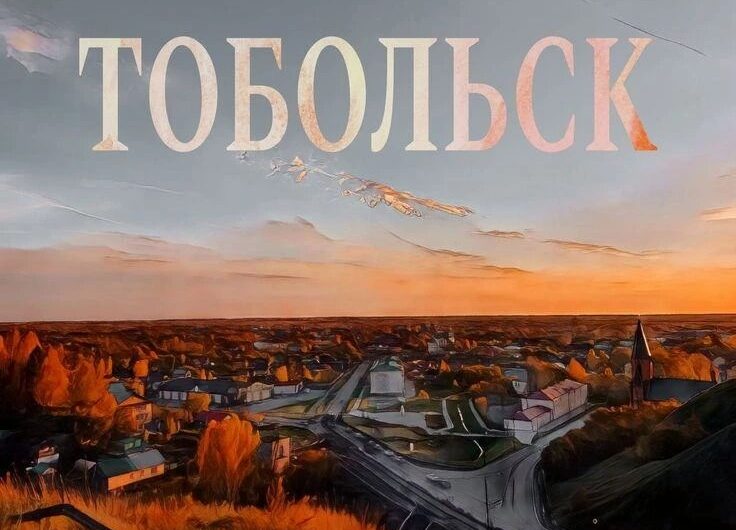
Imagine: an ancient stone fortress, the only one in all of Siberia, majestically towering over the confluence of two mighty rivers — the Tobol and the Irtysh. This is Tobolsk. A city that remembers the footsteps of Yermak’s Cossacks, inspired the great chemist Mendeleev, and became home to the famous composer Alyabyev.
This is not just a tour. This is an immersion into a legend, where every stone breathes history, and the past meets the present face to face.
What awaits young explorers?
✨ The Tobolsk Kremlin — the only stone kremlin in Siberia. Here you can walk along ancient walls, peer into old cathedrals, and feel like a pioneer in Yermak’s Garden.
🔔 The mysterious story of the “exiled bell” — a fascinating legend that will transport children to the era of tsars and offer an amazing discovery.
🎭 Visiting the greats: Mendeleev’s periodic table, Alyabyev’s music, Abdulov’s acting talent — a city where geniuses are born.
🏛️ The Prison Castle — a unique museum where wax figures tell the stories of convicts, and the atmosphere of the past captures your imagination.
🧪 And also — a real industrial marvel!
And after history, we will head to ZapSibNeftekhim — a plant where real wizards (engineers and chemists) turn gas… into toys, food packaging, car parts, and even clothing! The children will see giant machines, learn how polymers are born, and try their hand at being scientists in a chemistry laboratory.
✨ Who is this trip for?
For schoolchildren who want to:
-
See history with their own eyes
-
Touch science and technology
-
Be inspired by the grandeur of Siberia
-
And simply have a great and productive holiday!
Tobolsk is waiting for its young explorers! 🚀
📩 To learn about the program and book your spot, call 8 982 419 0049
Travel with purpose — choose Tobolsk with “Lingva”!
After the trip to Tobolsk, young explorers will achieve the following results:
1. KNOW (expanding their worldview and factual knowledge)
-
Historical facts: The child will learn that Tobolsk is the second Russian city in Siberia, founded in 1587, and why this matters for the country’s history.
-
The uniqueness of the kremlin: They will understand why the Tobolsk Kremlin is the only stone kremlin in Siberia and how it differs from the Moscow Kremlin.
-
Names of the greats: They will become acquainted with the legacy of D.I. Mendeleev (chemistry), A.A. Alyabyev (music), and A.A. Abdulov (theatre and cinema) — and will be able to connect these names with their home region.
-
Basics of chemistry and technology: They will learn how natural gas is transformed into polymers, and from those into everyday items (toys, clothing, pipes, packaging).
2. BE ABLE TO (developing 21st-century skills)
-
Observe and analyze: During the factory tour, the child learns to notice technological processes, ask the right questions, and draw conclusions.
-
Connect the past with the present: They see how historical heritage (the fortress, the prison castle) coexists with modern industry (the plant).
-
Navigate museums and urban spaces: They gain the skill of meaningful visits to cultural sites, rather than just “looking around.”
-
Ask questions to guides and experts: They learn to obtain information firsthand, overcoming the fear of “speaking up.”
3. CREATE (a constructive mindset and project experience)
-
Create their own project: After the trip, the child can make a presentation, poster, or even a short film about Tobolsk to present at school or in a competition.
-
Come up with their own research questions: For example, “Why did Mendeleev choose chemistry?” or “How does gas become plastic?” — and search for answers.
-
Keep a travel journal: They document impressions, sketch what they’ve seen, and note interesting facts — this becomes their personal creative product.
-
Participate in teamwork: Through group tasks (museum quests, collaborative information gathering), they learn to negotiate and share roles.
4. WANT TO (motivation and personal growth)
-
Pride in their country and region: The child begins to feel that Siberia is not a “remote backwater” but a place with a rich history and powerful industry.
-
Interest in science and technology: The visit to ZapSibNeftekhim may inspire them to choose an engineering or chemistry career.
-
Desire to learn more: A vivid, emotional encounter with history sparks interest in reading books, studying biographies, and further travels.
-
Self-confidence: Overcoming the “fear of asking the first question” to an expert or presenting project results builds the feeling: “I can do this, I’m capable, this interests me.”
Final Educational Outcome (for portfolios and life)
Following the trip, the child will have a tangible artifact (a travel journal, presentation, or project) that can be shown at school, in an extracurricular club, or when applying to a specialized class. But most importantly — they will genuinely begin to care about what they study, because they saw it with their own eyes, touched it, and lived it.
This is how we at “Lingva” define results: not souvenirs and photos, but deep understanding and personal engagement.