






“Mom, when will I go again?” – Why Children Need Educational Expeditions
In the Russian cultural tradition, travel was never merely movement through space. It was always a pilgrimage — a spiritual quest, a trial, and a discovery of oneself through the lens of another way of life. From pilgrimages to Constantinople to the “educational voyages” of noble youth — every road led not only to new lands but also to a deeper understanding of one’s own identity. It is precisely into this centuries-old paradigm that the educational expedition of the Lingva School to England fit organically, becoming for a group of teenagers from Surgut a modern version of this eternal narrative. Read the full expedition diaries here: https://lingua-edu.ru/gallery/anglija-glazami-podrostkov-9-dnejj-kotorye-nauchili-bolshemu-chem-uchebniki/
From “Artel” to “Team”: The Revival of Collective Identity
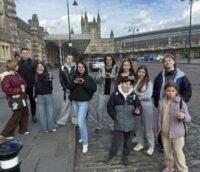
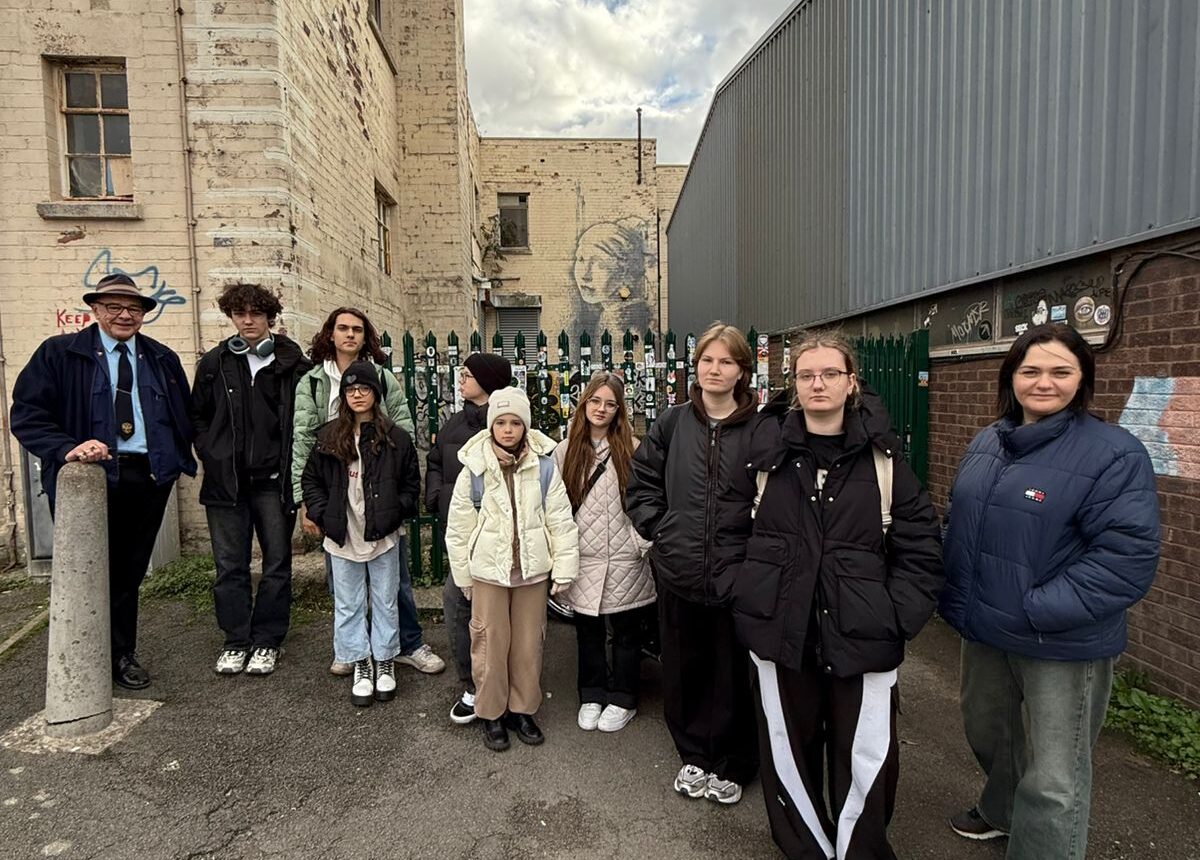
In parents’ feedback and children’s diary entries, one powerful leitmotif runs through — the amazing, almost familial cohesion of a mixed-age group. In the conditions of the hyper-individualized Western world through which they traveled, the teenagers intuitively recreated the model of the Russian artel — a community based on mutual support, responsibility, and collective solidarity.
“The kids helped each other and took all tasks very responsibly. They were able to find common ground and become friends, despite the significant age difference,” notes mentor Lyubov Shatalina. This is not just a successful group dynamic; it is a manifestation of a deep, archetypal form of being for the Russian person — sobornost (spiritual unity). When older participants informally look after the younger ones, and everyone together solves a common task (whether it’s finding a book in the Swindon library or navigating an unfamiliar city), the restoration of that very collective identity that modern society has largely lost takes place.
“Build a Bridge Like Brunel”: The Russian Response to British Pragmatism
Contemplating Brunel’s grandiose bridge in Bristol became for the children not just a tourist impression but a point of serious internal dialogue. Brunel is a symbol of the Western genius embodied in matter — the triumph of engineering thought that subdued the elements. His bridge is a challenge.
And the Russian soul, with its drive to overcome the impossible and find spiritual meaning in every deed, could not fail to respond to this challenge. “We realized that even if things are difficult and you don’t always see support, it’s important to keep working!” they write. This is not just a motivational phrase. This is an echo of that very Russian ideinost (commitment to an idea) — the striving for a great purpose, which has always been stronger than pragmatic calculation. They saw in Brunel not so much a successful entrepreneur as an obsessed dreamer, and this obsession struck a living chord within them.
“Don’t Judge a Book by Its Cover”: Meeting Steve as a Lesson of the Russian Heart
An evening at the pub with the host Steve, who “at first seemed a bit strange” but turned out to be “a very pleasant and open person,” is a classic story of overcoming the external to grasp the essence. This principle — “judge not by appearances but by substance” — is a cornerstone of Russian communicative culture.
In a society where a person’s value is often measured by social success and impeccable manners (as in England), the ability to see behind a “strange” exterior a sincere, open soul is a manifestation of a special, heart-centered vision. This experience taught the children the main lesson: in a world striving for standardization, genuine humanity often hides behind the most unremarkable facades.
Language as Living Tissue, Not a Set of Grammar Rules
Parents note with surprise and joy the “progress in spoken English.” But what lay behind this progress? Not cramming, but immersion. English ceased to be a school subject and became a means of survival, a tool for building connections, a bridge to another person — whether a passerby on the streets of Bath or a student at Oxford.
“Even at home, communication was in English,” rejoices mother Natalya. This is the method of language learning traditional for Russia — through environment and necessity, as in the era of Peter the Great, when nobles sent their offspring to Europe not so much to study as to “absorb the spirit.”
Returning with a “Gift”: Souvenirs as an Act of Love
The choice of souvenirs is telling. “We bought several pieces of Cheddar cheese… because it’s important to bring gifts to the people who sent us on this exciting journey.” This is not a consumerist gesture. This is a deeply rooted ritual in Russian culture of “bringing a treat” — a symbolic act of including those who stayed home in the circle of one’s journey, an act of sharing joy and gratitude.
Conclusion: Not Discovering a Country, but Discovering Themselves Within It
Ultimately, this expedition became for the children an act of self-discovery. They traveled across England, but they discovered for themselves the immutable laws of human coexistence — the power of mutual support, the value of sincerity, and the importance of preserving their inner integrity in a large and diverse world.
“The trust of parents and the children’s readiness to go again — that’s worth its weight in gold! It means this is the right path,” concludes Anna, the mother of two participants. And this is the main takeaway. The right path is not just a well-planned itinerary. It is a path on which a young person, having encountered a different world, does not lose themselves but, on the contrary, gains a deeper and more meaningful understanding of their roots, their connection with others, and their place in this world. And this is the key to raising not just cosmopolitans, but thoughtful, sensitive, and truly strong individuals who can carry their culture into the world and enrich it with the best the world has to offer.